
Inside Innovation: What to Watch in CPG - July 2026
Key Takeaways
This month’s food and beverage headlines all point to a useful tension in CPG innovation: trends still matter, but they are not enough. Taken together, these stories reinforce a pattern we keep seeing across food and beverage: sustainable innovation depends on understanding what is really driving consumer behavior, then building ideas that can hold up across product, brand, feasibility, and commercial realities.
The opportunity is not to chase every signal. It is to interpret the right signals clearly, make better choices, and build innovation that creates lasting value.
Consumer narratives need to be pressure-tested. Gen Z may be drinking differently, but new IWSR data suggests younger legal-age consumers are drinking at roughly the same rate as the broader adult population.
Nostalgia is valuable when it is actively managed. Spangler’s growth shows that legacy brands can stay relevant when they understand what to preserve, what to refresh, and what consumers still emotionally value.
Format expansion can unlock new growth from familiar brands. Jolly Rancher’s momentum shows how a strong flavor equity can stretch into new textures, forms, and occasions without losing brand recognition.
Health and sustainability claims need substance behind them. Fast Company’s critique of the CPG hype cycle is a reminder that innovation should be rooted in R&D, operational capability, and long-term purpose, not only marketing language.
The strongest innovation teams separate signal from noise. In a faster, AI-enabled, resource-constrained market, teams need clearer ways to evaluate which ideas are truly worth pursuing.
Gen Z Drinking Behavior Is More Nuanced Than the Moderation Narrative
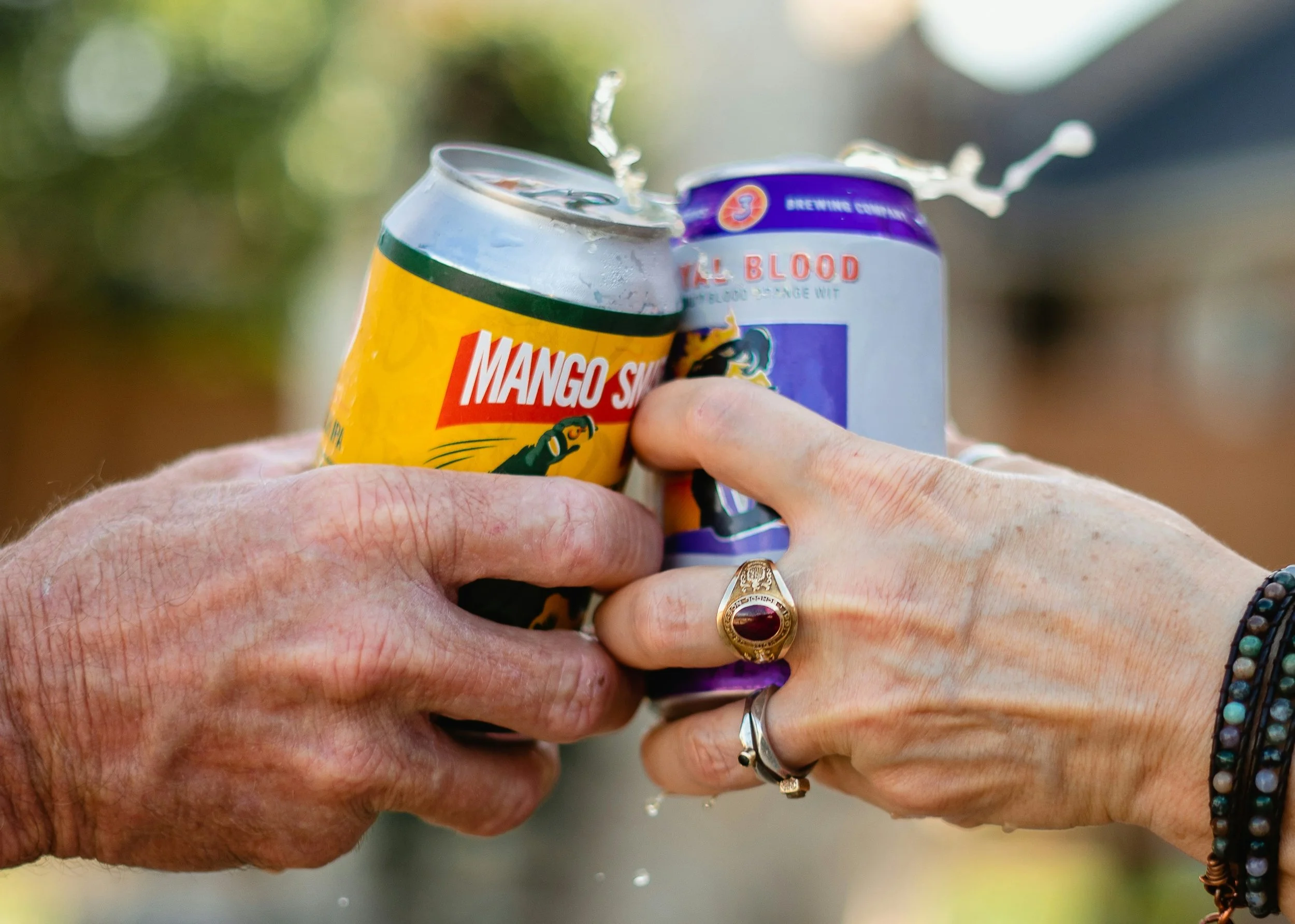
Food Dive’s coverage of a new IWSR report challenges one of the more persistent beverage narratives of the past several years: that Gen Z is broadly opting out of alcohol.
According to IWSR, the drinking rate among legal-age Gen Z consumers is now 74%, up from 66% three years ago and close to the overall adult drinking rate of 76%. That does not mean moderation is going away. In fact, IWSR also found that consumers across generations are drinking less per occasion, with average drinks per occasion dropping to 3.9 in 2025 from 4.4 in 2024.
The more important insight is that moderation is not isolated to one generation. Gen Z may be health-conscious, more likely to heed government health guidance around alcohol, and more intentional about what and when they drink, but they are not disengaged from alcohol. They are just creating different patterns of participation.
Those patterns matter for innovation. Gen Z consumers are highly social drinkers, with IWSR reporting that 18% drank with five or more people on their last occasion. They are also highly engaged with cocktails, with 84% reporting that they had consumed one in the past six months. That helps explain why ready-to-drink cocktails, higher- and lower-ABV options, and occasion-specific formats continue to resonate.
Integral Takeaway: The most useful innovation opportunities often emerge when teams look past the headline narrative. “Gen Z is drinking less” is too simple. A more productive framing is: younger consumers are drinking with more intention, different occasions, stronger social cues, and higher expectations around health, flexibility, and experience. That opens a more nuanced innovation space.
Read more: “Gen Z isn’t drinking less after all,” Food Dive.
Spangler Shows How Legacy Brands Can Stay Relevant Without Losing Their Core
Food Dive’s profile of Spangler Candy Company demonstrates an example of how nostalgia can become a durable innovation platform when handled with discipline.
Spangler owns a collection of legacy candy brands, including Dum Dums, Sweethearts, Bit-O-Honey, candy canes, and Necco Wafers. Many of these brands have histories that stretch back decades or even more than a century. That history creates emotional equity competitors cannot easily replicate.
But nostalgia alone is not the strategy. Spangler’s strength appears to come from understanding which parts of a brand should be protected and which parts should be modernized.
Bit-O-Honey is a useful example. After acquiring the brand, Spangler refreshed the packaging to better appeal to its largely adult consumer base, made the bee mascot less juvenile, softened the bar, and returned to the original recipe with more almonds. Food Dive reported that sales surged 50% over the last year after those changes.
Sweethearts followed a similar pattern. The brand returned to its classic flavor mix and original crunchy recipe while adding culturally relevant seasonal messaging, including “Love in This Economy” conversation heart phrases that created timely buzz.
Necco Wafers took a different path. After acquiring the nearly 200-year-old candy, Spangler largely left it alone because consumers wanted the nostalgia intact, showing that relevance does not always mean reinvention. Sometimes it means knowing what not to change.
Integral Takeaway: Legacy brands need a clear decision lens for innovation. What is sacred? What can evolve? What does the current consumer still value? What is getting in the way of renewed relevance? Spangler’s approach shows that brand history can be a growth asset when it is treated as an active platform, not a museum piece.
Read more: “How Dum Dums owner Spangler created a candy empire built on nostalgia,” Food Dive.
Jolly Rancher’s Growth Shows the Power of Format Expansion
CNN’s recent visit to a Jolly Rancher factory highlights a different kind of legacy-brand innovation: taking a familiar flavor system and extending it into new forms, textures, and occasions.
The video positioned Jolly Rancher as a fast-growing brand, noting that sales grew 26% last year and that the brand is on track to become a billion-dollar business. Hershey is also increasing investment behind innovation, with the segment noting that overall R&D investment rose 25% as the company works to develop more products faster.
What makes Jolly Rancher especially interesting is that the innovation strategy is not built around abandoning the core. It is built around expanding how consumers experience it.
The brand already has strong flavor equity. But, as pointed out in the video, hard candy does not fit every occasion. By moving into ropes, gummies, freeze-dried candy, hot varieties, and other forms, Hershey is creating more ways for consumers to access the same recognizable flavor world.
The manufacturing walkthrough in the CNN piece also reinforces an important point: format innovation is not just a marketing exercise. It depends on production capability, R&D investment, process development, and the ability to scale new product forms consistently.
Integral Takeaway: Strong brands can unlock growth by asking where their equity has permission to travel. Jolly Rancher is not simply adding SKUs. It is translating a familiar sensory identity into new formats and occasions. The strategic question for innovation teams is: what part of the brand experience is most ownable, and how else could consumers want to experience it?
Read more: CNN feature on Jolly Rancher’s growth and Hershey’s innovation investment.
Fast Company Challenges the Industry to Separate Innovation From Hype
Fast Company’s discussion around the “broken” CPG hype cycle is an interesting commentary on the industry, especially at a time when claims, trends, and product launches are moving faster than ever.
The article argues that too much of modern CPG innovation is driven by marketing hype rather than true technological, operational, or nutritional advancement. It points to a familiar pattern: brands launch around hot claims or trending ingredients, gain attention quickly, and then struggle to build lasting value.
The author argues that meaningful innovation requires stronger R&D, more sustainable product and process design, greater technical expertise, and more efficient value chains. The critique is especially pointed for emerging brands that rely heavily on co-manufacturers and may not own the underlying technology or production know-how behind their products.
Whether every brand needs to own deep technical infrastructure is debatable. Many successful brands rely on external partners, and co-manufacturing can be an important part of a smart growth model. But the broader point is important: a product has to be supported by real consumer need, credible product design, operational feasibility, and a business model that can endure beyond the first wave of attention.
Integral Takeaway: The answer is not to reject trends. It is to evaluate them more rigorously. Food and beverage teams need to understand whether a trend reflects a meaningful consumer job, whether the brand has permission to play, whether the product can be made and scaled well, and whether the idea creates long-term value rather than short-term noise.
Read more: “The CPG hype cycle is broken. Here’s how to fix it,” Fast Company.
What This Month’s Signals Mean for Innovation Teams
July’s stories look different on the surface. Alcohol behavior, nostalgic candy, flavor-led brand expansion, and sustainable innovation infrastructure are not the same topic.
But they all point to the same challenge: food and beverage teams need to get better at interpreting what is really happening beneath the trend. The market does not need more surface-level ideas. It needs better-framed opportunities, stronger concept choices, and clearer paths from insight to execution.
That is especially true now, as AI accelerates idea generation and lean teams face more pressure to move quickly. When ideas become easier to generate, the advantage shifts to teams that can decide well. They need to know which signals matter, which opportunities fit the brand, which ideas can scale, and which paths are worth the organization’s limited time and resources.
July’s takeaway is simple: innovation does not win because it is new. It wins when it is relevant, ownable, feasible, and built to last.
