
Beverage Innovation’s Retail Reality: Shelf Position Matters
Summary
Beverage innovation is becoming more need-based, but retail is still physically category-based. Consumers may think in terms of hydration, energy, protein, or relaxation, but stores still operate through aisles, coolers, planograms, and shelf sets.
Shelf position shapes how consumers understand a beverage. The same product may communicate something different depending on whether it sits near soda, water, sports drinks, dairy, alcohol, wellness, or checkout coolers.
Functional beverages create classification challenges. A drink can serve multiple jobs, but in physical retail it usually has to live in one primary location, which forces strategic tradeoffs.
Digital merchandising is more flexible than in-store merchandising. Online, one beverage can be tagged across multiple needs. In-store, packaging and placement have to work harder because the product has fewer ways to explain itself.
Innovation teams should consider shelf position earlier. Category placement, packaging, claims, format, and shopper education should be part of the concept development conversation, not an afterthought.
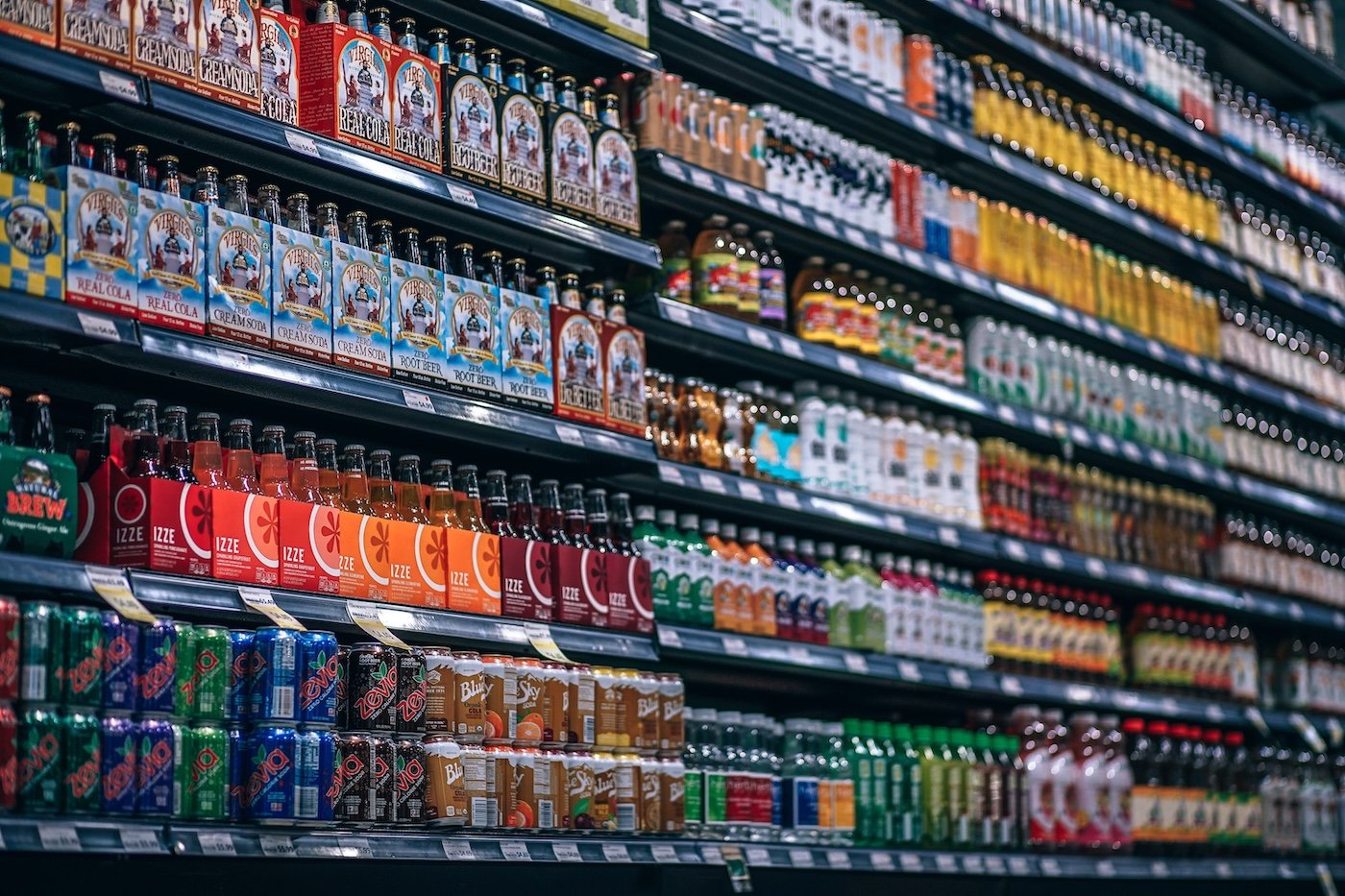
The Beverage Consumer Continues to Change Faster Than the Beverage Aisle
The modern beverage shopper is not always deciding between water, soda, juice, coffee, tea, energy drinks, sports drinks, and alcohol. They are making more specific choices around occasion, sometimes based on trends, dietary goals, or health needs.
They may want electrolytes after a workout, caffeine but without sugar, protein between meals, something gut-friendly after lunch, a lower-alcohol option for a social occasion, or a drink that feels indulgent without feeling excessive.
This is why functional beverages have become such an active space. They give brands a way to answer more precise consumer needs. They also create opportunities for premium positioning, because shoppers may be less likely to trade down when a drink delivers a specific, meaningful benefit.
FMI’s report reflects that shift. It suggests that retailers could help shoppers navigate the category by grouping or messaging beverages around needs, such as hydration, energy, protein, digestive support, and relaxation. That logic makes sense, but the challenge lies in the fact that physical stores do not (and likely cannot) reorganize themselves every time consumer logic changes.
Aisles have histories. Categories have owners. Planograms have constraints. Coolers have finite space. Retailers have buying teams, performance metrics, vendor relationships, and operational systems that are built around existing category structures. So while the consumer may be moving toward a more fluid beverage mindset, the store remains a structured environment.
This challenge is where many beverage innovations will either gain traction or lose momentum.
Shelf Position Is a Strategy Decision
In the beverage industry, shelf position can change the meaning of the product. A prebiotic soda placed in the carbonated soft drink aisle may read as a better-for-you soda replacement. The same product placed in a wellness set may read as a digestive health solution. A protein coffee in the refrigerated dairy case may signal meal replacement or nutrition. In the coffee aisle, it may signal energy and routine. Near sports nutrition, it may signal performance.
The product has not changed, but the comparison set has.
Consumers interpret products in context. They use the surrounding shelf to understand what a product is, what job it performs, what alternatives it competes with, and whether it belongs in their routine.
For an established category, that context may be obvious. For a functional or hybrid beverage, it often is not. This creates a strategic question early in the innovation process: Where does this product need to live for the consumer to understand it?
That answer may not be simple. A beverage can have more than one legitimate home. A relaxation beverage might sit near tea, sparkling water, functional beverages, or alcohol alternatives. A protein drink could make sense in dairy, shelf-stable nutrition, fitness, convenience, or meal replacement.
Physical retail usually forces a choice, but that choice should not be left until sell-in. It should shape how the product is positioned, packaged, claimed, priced, and launched.
Functional Benefits Can Create Retail Ambiguity
The more functional a beverage becomes, the more classification complexity it can create. Traditional beverages were easier to place because the category logic was clearer. Soda went with soda. Juice went with juice. Bottled water went with bottled water. Beer went with beer. But functional beverages blur those boundaries.
A single drink might be sparkling, low sugar, prebiotic, caffeine-free, mood-supporting, and positioned as an alcohol alternative. That gives the product a richer consumer story, but it also raises a practical retail question: what aisle owns it?
Retailers do not just sell products; they manage space. If a product pulls from multiple categories, the brand has to make the retailer’s job easier. It needs a clear primary role, a clear consumer target, a clear comparison set, and a credible reason for why it belongs where the brand wants it placed.
Without that clarity, the product risks being categorized by the retailer in a way that weakens the consumer proposition.
That does not mean multi-benefit beverages are a bad idea. In fact, many of the most interesting beverage opportunities are happening at the intersection of categories and need states.
Hybrid products need sharper discipline. The benefit stack has to ladder to one clear role. Otherwise the product can become too many things at once, which makes it harder to merchandise and harder for shoppers to choose.
Digital Can Handle More Fluidity Than the Store
Online merchandising can solve some of this more easily than physical retail. A beverage product page can carry multiple tags: hydration, low sugar, energy, protein, gut health, alcohol-free, GLP-1 friendly, relaxation, organic, or functional wellness. Filters can help shoppers search by needs. Retail media can place products in multiple contexts. AI-enabled discovery can recommend a beverage based on a shopper’s stated goal instead of a static category.
But while having that broad level of flexibility in digital is powerful, it is not the full answer. FMI noted that pure-play e-commerce has grown to account for 3% of beverage sales, and that TikTok generated $46 million in beverage sales during the fourth quarter of 2025, according to Circana.
Those channels are growing and worth watching, but grocery and convenience stores still dominate beverage sales. Most beverage brands cannot design only for a flexible digital environment. They have to design for the physical store, where a product gets one primary home, a limited amount of package real estate, and only a few seconds of shopper attention.
This creates a clear innovation brief: the product has to be digitally searchable and physically legible. The online version can tell a layered story. The shelf version has to communicate quickly. That makes packaging, naming, claims hierarchy, visual blocking, and shopper education more important, not less.
The Innovation Brief Must Include the Shelf
Too often, shelf placement is treated as a commercialization question that comes after the product concept is settled. For many beverage innovations, that is too late.
If the consumer benefit depends on the shopper understanding a new use case, the shelf context matters from the start. The team needs to know whether the product is entering an existing category, stretching a category, or asking the retailer and shopper to think differently.
That needs to be a significant part of the brief. A beverage innovation team should be able to answer the following:
Where will shoppers expect to find this product?
Where will retailers likely want to place it?
What products will sit around it?
What comparison are we trying to create?
What comparison do we need to avoid?
What will the package need to communicate in three seconds?
Does the product need signage, sampling, cross-merchandising, coupons, or bundled offers to teach the use case?
Can the same positioning work online and in-store?
Those questions determine whether the idea can survive contact with the retail environment.
A product designed around relaxation may need a very different pack architecture if it is merchandised near tea versus sparkling water versus nonalcoholic spirits. A protein beverage may need a different benefit hierarchy if it is near dairy versus sports nutrition. A low-sugar beverage may need to decide whether the lead message is permissibility, function, taste, or lifestyle. The shelf forces clarity, which by and large, is a good thing.
What This Means for Beverage Brands
FMI’s recommendation to organize beverages by need state may prove directionally right. Retailers may experiment with functional sets, benefit-based signage, secondary displays, online filters, and cross-category merchandising. But beverage brands should not assume the store will reorganize itself around their value proposition. Instead, brands need to build the retail reality into the innovation process.
That means understanding the primary consumer job and how it is served through established categories and store layout. It means developing claims that work in the intended shelf context. It means designing packaging for quick interpretation. It means preparing the retailer story around shopper behavior, not just brand aspiration. It means knowing whether the product’s strongest growth path depends on changing consumer behavior, changing retailer behavior, or both.
If every beverage is promising a benefit, the product that wins may not be the one with the longest claim list. It may be the one with the clearest role and the best fit between consumer need, retail placement, and product experience.
Final Thought
Beverage innovation is moving toward need states, but the shelf still matters. That tension is not a barrier to innovation. It is a design constraint that can sharpen the work. For innovation teams, the question is not only what need the product serves. It is where that need will be recognized in the real world.
Shelf position matters because it is one of the first places strategy becomes visible. The strongest beverage brands will build that reality into the process early, creating products that make sense in the consumer’s life and in the retail environments where choices are actually made.
Integral CPG is a food and beverage innovation partner for CPG brands. If you have a question about food or beverage innovation, contact us!
People Also Ask
Why does shelf position matter for beverage innovation?
Shelf position matters because it shapes how shoppers understand and compare a beverage. The same product can communicate a different role depending on whether it sits near soda, water, sports drinks, dairy, alcohol alternatives, wellness products, or checkout coolers.
What is need-state beverage innovation?
Need-state beverage innovation means developing drinks around the specific job a consumer wants them to do, such as hydration, energy, protein, digestive support, relaxation, lower sugar, or alcohol moderation. It focuses on the consumer’s desired outcome rather than only the traditional beverage category.
Should grocers reorganize beverage aisles by function?
Grocers may benefit from clearer functional merchandising, but fully reorganizing beverage aisles by function is operationally complex. Retailers have to consider planograms, refrigeration, supplier relationships, category ownership, shopper habits, and sales measurement. Many may test hybrid approaches such as signage, secondary displays, filters, and cross-merchandising.
How can beverage brands prepare for functional merchandising?
Beverage brands can prepare by defining the product’s primary consumer job, identifying the most likely shelf location, clarifying the benefit hierarchy, designing packaging for fast comprehension, and building a retailer story that explains why the product belongs in a specific set.
Why are functional beverages harder to place in stores?
Functional beverages are harder to place because they often cross category boundaries. A beverage might be sparkling, low sugar, prebiotic, protein-rich, relaxing, or alcohol-free at the same time. In physical retail, the product usually needs one primary location, which forces strategic tradeoffs.
How is online retail changing beverage discovery?
Online retail allows beverages to be tagged and filtered by multiple benefits, such as hydration, energy, low sugar, protein, gut health, or alcohol-free. This makes digital discovery more flexible than in-store merchandising, where a product typically has one primary shelf location.
