
CPG Innovation Examples: How Top Brands Define Success
Summary: What Successful CPG Innovation Has in Common
Successful CPG innovation starts with a clearly defined consumer job. Brands like Chobani, OLIPOP, Celsius, Oatly, and Liquid Death did not simply launch new products; they reframed existing categories around more specific consumer needs.
The best CPG innovation examples define success beyond launch. Winning teams track adoption, repeat, distribution, velocity, portfolio fit, and brand meaning—not just first-year buzz.
Strong innovation teams commercialize with discipline. They align product, packaging, channel, messaging, supply, and retail execution before scaling.
Breakthrough brands often succeed by making a familiar category feel newly relevant. Greek yogurt, soda, energy drinks, oat milk, and water were not new categories; the innovation came from sharper positioning and execution.
Winning innovation creates a repeatable growth system. The strongest brands use market feedback to expand, refine, and protect relevance over time.
Why CPG Innovation Examples Matter
Most innovation discussions focus on the idea. But when we look at the strongest CPG innovation examples, the better question is not simply, “What did they launch?” It is “how did they define success before they scaled?”
A product can be novel and still underperform. A concept can test well and still struggle on the shelf. A brand can generate trial and still lose momentum if the consumer does not come back.
Circana’s New Product Pacesetters work reinforces that new product success is measurable: the firm evaluates major CPG innovations by year-one sales and identifies products that outperform in food, beverage, and nonfood categories. Its 2024 report noted that top launches reflected consumer demand for convenience, brand connection, and enhanced functionality.
For Integral, this is the core lesson: successful CPG innovation is not just creative. It is decision-driven. Top brands define:
What consumer job they are solving
Why the product belongs in the brand’s portfolio
What commercial proof will matter
How the product will scale
What in-market signals will guide iteration
Below are five successful CPG innovation examples that show how disciplined execution and clear success metrics create market advantage.
1. Chobani: Defining Success as Category Transformation
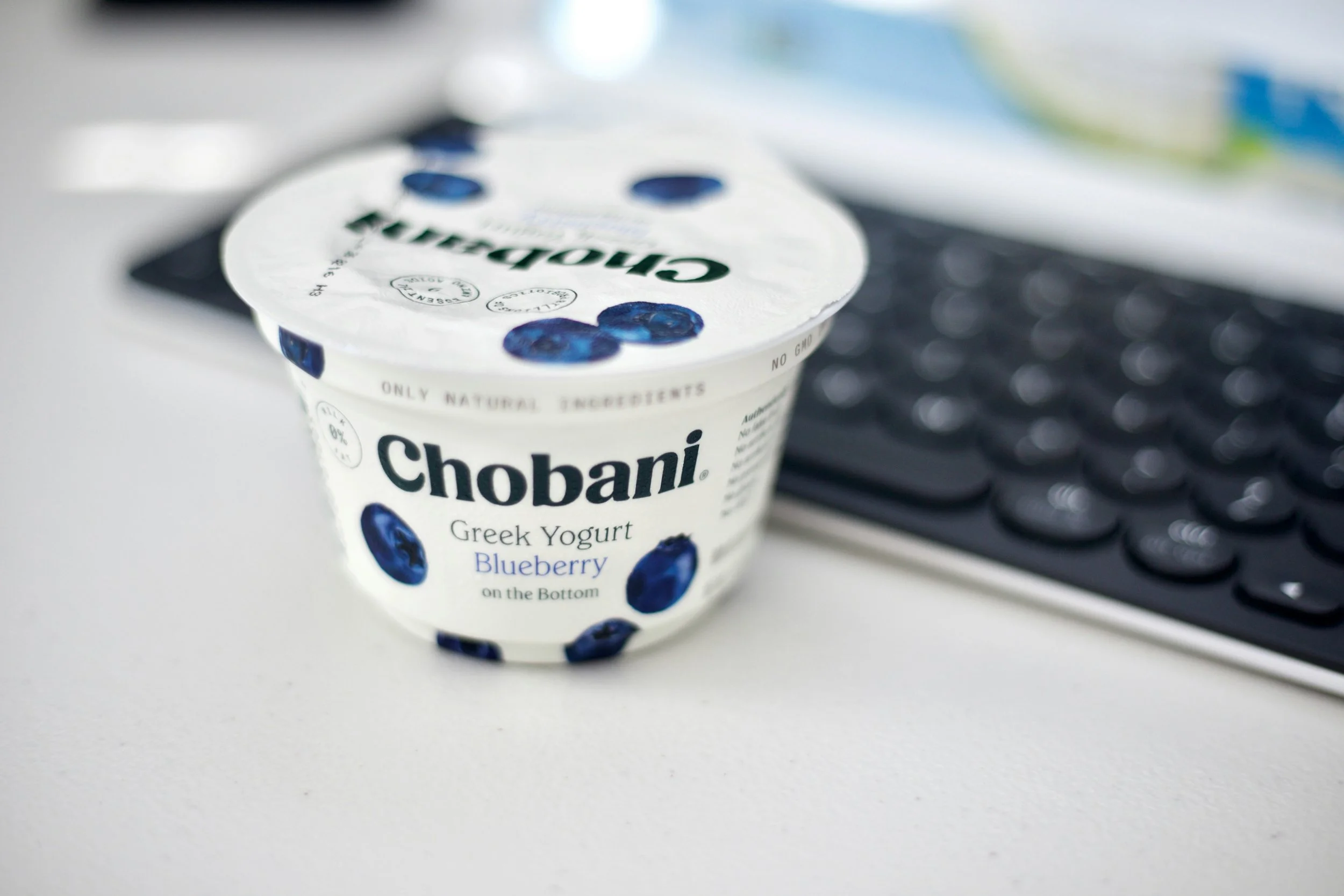
Chobani is one of the clearest examples of successful CPG innovation because it did more than launch Greek yogurt. It helped transform how American consumers understood yogurt itself.
When Chobani launched in 2007, Greek yogurt represented a small part of the U.S. yogurt market. In its IPO filing, Chobani stated that six years after its first cups hit shelves, it generated approximately $1.1 billion in 2013 net sales and drove about 45% of total spoonable yogurt category growth during that period.
What Chobani defined clearly
Chobani’s success was not only about higher protein. The brand clarified a broader job: Make yogurt feel more substantial, nutritious, and satisfying for mainstream consumers.
That job translated into multiple success drivers:
Thicker texture
Higher protein
Simple ingredients
Accessible mainstream distribution
Strong retail presence
Chobani also demonstrated that scaling innovation requires operational commitment. The company built production capability and distribution depth rather than relying solely on brand storytelling.
What CPG brands can learn
Chobani shows that the strongest innovation often comes from reframing a familiar category around a sharper consumer need.
The success metric was not “launch Greek yogurt.” It was to make Greek yogurt a mainstream American eating habit. That is the difference between product innovation and category-shaping innovation.
FAQ: Why is Chobani considered a successful CPG innovation example?Chobani succeeded because it connected product attributes - texture, protein, simplicity - to a mainstream consumer job. It also scaled distribution and manufacturing in a way that allowed the product to redefine the yogurt category.
2. OLIPOP: Defining Success as Permission to Re-enter Soda
OLIPOP is a strong example of modern successful CPG innovation because it did not ask consumers to abandon soda behavior. It gave them a new reason to return to it.
The brand entered a category with deep emotional and habitual roots, then repositioned soda through digestive health, fiber, nostalgia, and lower sugar. CNBC reported in 2023 that OLIPOP was approaching $200 million in annual sales, and later reporting and company data have reflected continued rapid growth and broad retail expansion.
What OLIPOP defined clearly
The job was not simply to create a healthier soda. It was to let consumers enjoy soda again while feeling better about the choice. That clarity shaped execution:
Familiar soda flavors
Bright, accessible packaging
Functional digestive-health positioning
Retail placement that could sit near conventional soda
Cultural relevance through social and limited-edition collaborations
OLIPOP did not frame the product like a supplement. It protected the emotional job of soda: taste, nostalgia, treat, and routine.
What CPG brands can learn
OLIPOP’s success highlights the value of solving both the functional and emotional jobs.
The functional job: less sugar, prebiotics, fiber.
The emotional job: soda enjoyment without the same level of tradeoff.
That duality is critical in food and beverage innovation. Consumers do not want functionality at the expense of pleasure. The best products resolve that tension.
FAQ: What made OLIPOP’s innovation strategy effective?OLIPOP succeeded by translating a health trend into a familiar soda experience. Instead of asking consumers to adopt a completely new behavior, it improved an existing behavior with better-for-you benefits and strong emotional relevance.
3. Celsius: Defining Success as a Lifestyle Use Case, Not Just Energy
Celsius is one of the most important beverage innovation stories of the last decade because it repositioned energy around fitness, performance, and lifestyle.
Food Dive reported that PepsiCo signed a distribution agreement and took an 8.5% stake in Celsius in 2022, a move that helped strengthen the brand’s national reach.
Celsius later reported $725.1 million in quarterly revenue in Q3 2025 and 20.8% U.S. energy category market share, reflecting the continued strength of its portfolio.
What Celsius defined clearly
Celsius did not try to win by being another energy drink. It defined a more specific job: Provide energy that feels aligned with active, wellness-oriented lifestyles.
That shifted the competitive frame. The product was no longer just for gamers, truck stops, or late-night performance. It fit:
Fitness routines
Morning energy
Workday productivity
Active lifestyle identity
Better-for-you beverage habits
What CPG brands can learn
Celsius demonstrates how important it is to define success by use occasion and identity, not just category growth. The brand’s growth was supported by:
Clear positioning
Strong distribution leverage
Lifestyle-driven consumption occasions
A compelling alternative to legacy energy brands
For innovation teams, the lesson is simple: a product can enter an existing category and still create a new success model if it changes the consumer’s reason to buy.
FAQ: Why did Celsius stand out in the energy drink category?Celsius stood out by linking energy to fitness, wellness, and lifestyle identity. That differentiated it from legacy energy brands and expanded the occasions where consumers could see energy drinks as relevant.
Liquid Death is one of the most unconventional CPG innovation examples because the product itself - water - was not new.
4. Liquid Death: Defining Success as Brand Behavior Change
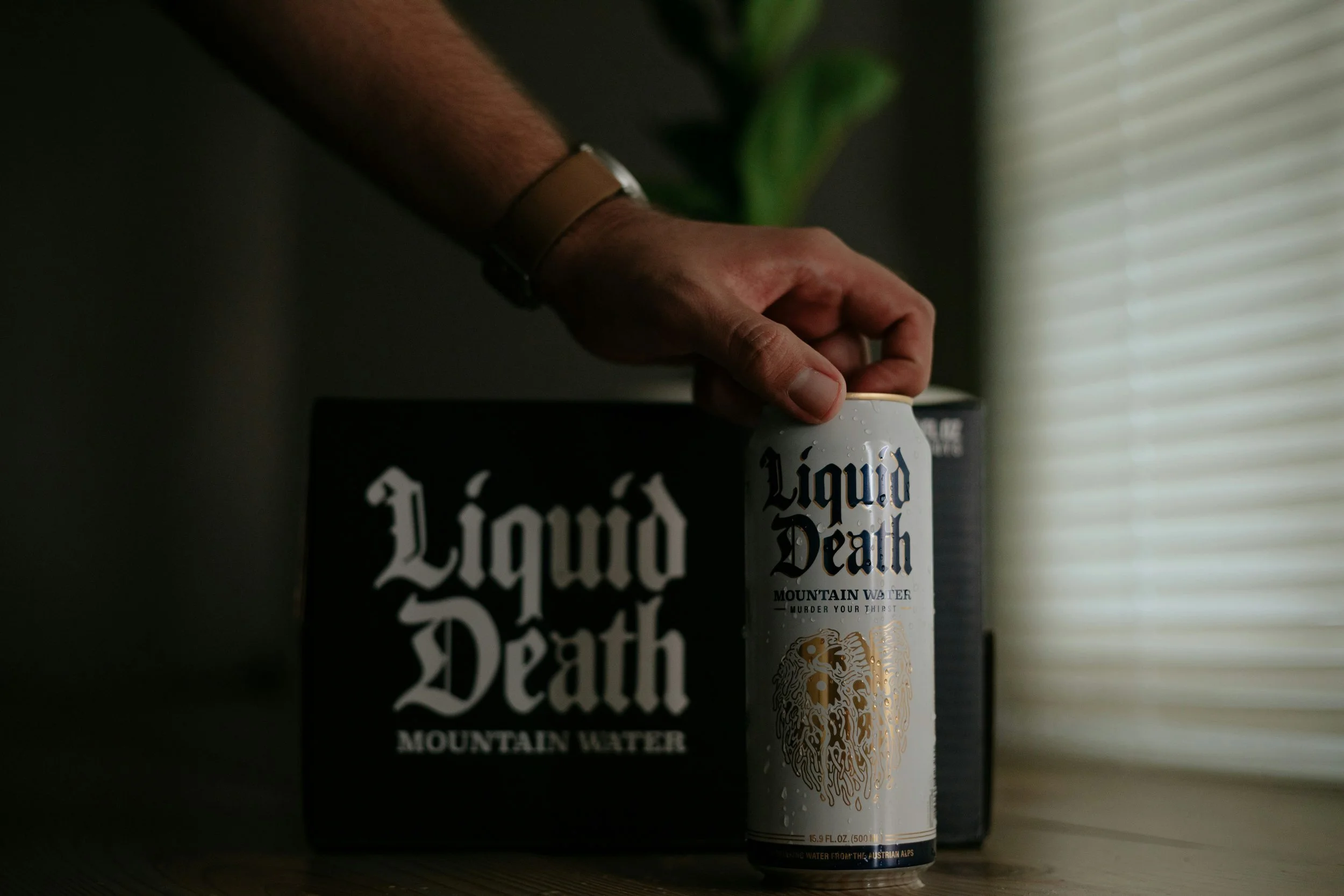
Liquid Death is one of the most unconventional CPG innovation examples because the product itself - water - was not new. The innovation was in brand positioning, packaging, and cultural behavior.
Liquid Death closed a $67 million financing round in 2024 at a $1.4 billion valuation, with funds intended to support national distribution and product innovation. Forbes also reported that Liquid Death’s retail sales rose sharply from 2022 to 2023, underscoring the commercial power of its brand-led disruption.
What Liquid Death defined clearly
Liquid Death’s job was not simply hydration. It was to make water feel culturally interesting, socially expressive, and more sustainable than plastic-bottled alternatives.
That created a very different success model. Instead of competing only on purity, source, or wellness, Liquid Death competed on:
Entertainment
Anti-category branding
Aluminum packaging
Social shareability
Merchandising and cultural identity
What CPG brands can learn
Liquid Death shows that innovation can come from changing the meaning of a category.
The product did not need to be technically complex to be strategically sharp. The brand gave consumers a new way to participate in a familiar behavior.
For innovation leaders, the takeaway is that success metrics should include not only sales, but also brand distinctiveness and cultural traction.
FAQ: Is Liquid Death a product innovation or brand innovation?Liquid Death is primarily a brand and commercialization innovation. It transformed a familiar and basic product through distinctive positioning, packaging, and cultural identity.
5. Oatly: Defining Success as a New Role for Plant-Based Dairy
Oatly helped make oat milk a mainstream part of coffee culture by solving a specific product and channel challenge: plant-based milk needed to work well in coffee.
Oatly generated about $421 million in revenue in 2020and pursued an IPO in 2021, reflecting the brand’s rapid global growth. BevNET also cited Oatly’s SEC filing showing approximately $421 million in 2020 revenue.
What Oatly defined clearly
Oatly’s success was not just about plant-based dairy. It was about making oat milk relevant to a highly specific behavior: Create a plant-based milk that performs well in coffee and feels credible in café culture.
The barista strategy mattered because it created:
Trial in a trusted environment
Product credibility with coffee professionals
A clear use case
A premium positioning bridge into retail
What CPG brands can learn
Oatly shows that channel strategy can be part of product-market fit. The brand did not rely only on shelf presence. It built adoption through usage context, then expanded into broader grocery behavior.
That is a repeatable pattern: when a product requires behavior change, the right channel can teach the consumer how to use it.
FAQ: Why was Oatly’s go-to-market strategy important?Oatly’s café and barista strategy helped consumers experience the product in a trusted use case before buying it at retail. That made the innovation easier to understand and adopt.
The Repeatable Patterns Behind Successful CPG Innovation
Across these examples, the winning pattern is consistent. Successful CPG innovation is not defined by novelty alone. It is defined by how clearly the brand answers five questions.
1. What job are we solving?
Chobani solved substantial, protein-rich everyday nutrition.
OLIPOP solved better-for-you soda permission.
Celsius solved energy for active lifestyles.
Liquid Death solved culturally expressive hydration.
Oatly solved plant-based milk performance in coffee.
2. What will prove that consumers care?
Strong teams define proof beyond launch metrics:
Trial
Repeat
Velocity
Distribution
Usage occasion adoption
Brand equity lift
Category expansion
3. What must be true commercially?
Successful products are built with commercial reality in view:
Retail fit
Channel strategy
Margin structure
Manufacturing capability
Packaging clarity
Competitive set
4. What should we measure after launch?
Winning brands treat launch as the beginning of learning. They monitor:
Consumer feedback
Retailer response
Sales velocity
Repeat purchase
Channel performance
Portfolio interaction
5. How do we scale without losing the original promise?
This is where many innovations drift. The strongest teams know which elements are non-negotiable:
Product experience
Brand meaning
Consumer job
Quality cues
Commercial model
That is what allows successful CPG innovation to move from launch to sustained performance.
A Practical Framework for Defining Innovation Success
Before launching a new CPG product, teams should align on a success framework.
Consumer Success
What job does the product solve?
What behavior must change?
What exists to drive repeat purchase?
Brand Success
Does this strengthen the brand’s role?
Does it expand the brand’s permission?
Does it create differentiation?
Commercial Success
What velocity is required?
What distribution is realistic?
What margin structure must hold?
Operational Success
Can it scale consistently?
Can supply support growth?
Can quality hold as demand increases?
Learning Success
What will we learn after release?
What signals will trigger iteration?
What will determine the next version?
This is the difference between launching a product and building an innovation system.
In Summary
The best CPG innovation examples are not stories of lucky timing or clever ideas alone. They are stories of disciplined choices.
Chobani, OLIPOP, Celsius, Liquid Death, and Oatly each succeeded by making a familiar category feel newly relevant. But the deeper lesson is not to emulate their products.
It is to emulate the process behind them:
Define the consumer job
Clarify the commercial model
Measure what matters
Build for repeat
Learn after launch
That is how successful CPG innovation becomes more than a product release. If your team is shaping your next product, portfolio, or category expansion, share this article with the people responsible for defining what success should look like.
And if you want help building the decision framework behind your next innovation, contact Integral. We help food and beverage teams make better innovation decisions when it matters most.
People Also Ask
What are examples of successful CPG innovation?
Successful CPG innovation examples include Chobani Greek yogurt, OLIPOP prebiotic soda, Celsius energy drinks, Liquid Death canned water, and Oatly oat milk. Each succeeded by connecting a familiar category to a clearer consumer job, then scaling through disciplined commercialization.
What makes a CPG innovation successful?
A CPG innovation is successful when it creates consumer relevance, earns repeat purchase, scales commercially, and strengthens the brand’s long-term position. Novelty alone is not enough; the product must solve a meaningful consumer job and perform in market.
Why do some CPG innovations succeed while others struggle?
Successful CPG innovations usually have clear success criteria, strong consumer understanding, commercial readiness, and disciplined execution. Products struggle when teams rely on trends or internal assumptions without validating the consumer need and commercialization model.
How should CPG brands measure innovation success?
CPG brands should measure innovation success through trial, repeat purchase, sales velocity, distribution, margin performance, consumer feedback, and portfolio contribution. The right metrics depend on the product’s strategic role.
What can food and beverage brands learn from successful CPG innovation examples?
Food and beverage brands can learn that successful innovation starts with clarity: the consumer job, the commercial model, the channel strategy, and the post-launch learning system. Top brands do not just launch products; they define how success will be measured before the product reaches market.
