
Inside Innovation: What to Watch in CPG - August 2026
Key Takeaways
Health-forward innovation is getting specific. Cranberry polyphenol research highlights how ingredients can move beyond broad wellness positioning when supported by emerging science and a clearer consumer benefit.
International growth requires more than distribution expansion. U.S. brands finding stronger momentum overseas need to understand what travels, what localizes, and where market-specific product strategy matters.
Legacy brands are developing sharper differentiators. 7Up’s lime-forward reformulation shows how flavor, packaging, and positioning can work together to create more distinctive brand relevance.
Flavor is becoming a functional communication tool. Imbibe’s beverage trend report shows that flavor can help signal hydration, energy, indulgence, complexity, nostalgia, or wellness before a claim is even processed.
The strongest innovation teams turn signals into decisions. Growth depends on knowing which signals matter, how they fit the brand, and what must be true for an idea to succeed in-market.
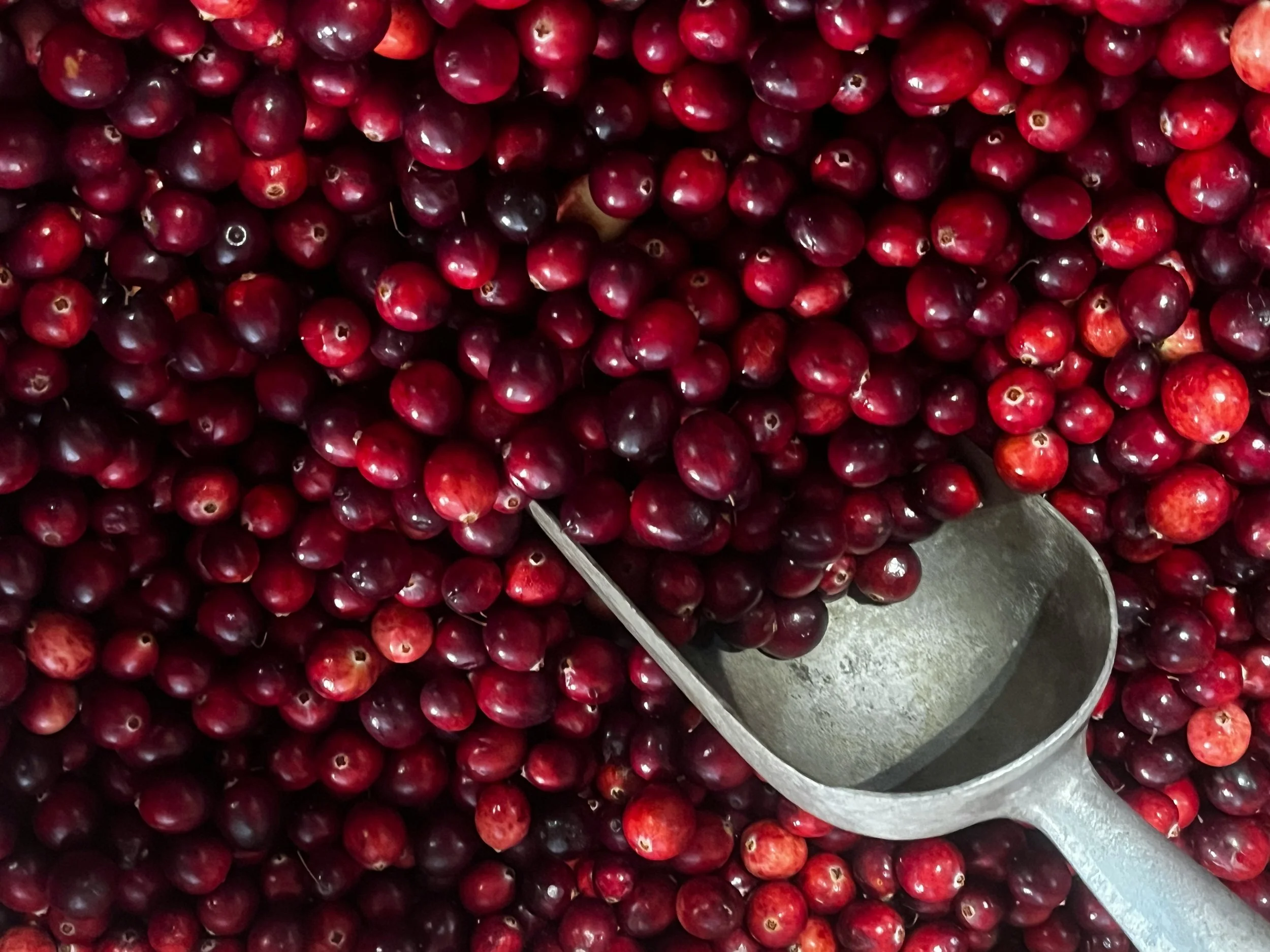
Cranberry Research Shows the Opportunity for More Specific Health Innovation
Prepared Foods’ coverage of new cranberry polyphenol research highlights an important shift in better-for-you innovation: health benefits are becoming more specific, more evidence-driven, and more connected to measurable consumer needs.
The article reports on a randomized controlled trial published in Clinical Nutrition in which 72 college students ages 20 to 25 consumed an 8-ounce cranberry drink daily at breakfast for 12 weeks. Compared with placebo, the cranberry group showed significant changes in circulating polyphenol metabolite concentrations, reduced diurnal cortisol levels, and improvements in select measures of cognitive function, including short-term and phonological memory. The study did not find observed improvements in self-reported mood, stress, anxiety, or depression, which the article notes may be partly because the study population was young and healthy, leaving limited room for measurable improvement in those areas.
What makes this especially relevant for food and beverage innovation is that the story is not simply “cranberries are healthy.” Cranberries contain bioactive compounds including anthocyanins, flavonoids, and proanthocyanidins, and research is exploring how those compounds may affect specific aspects of brain, immune, urinary tract, stomach, and oral health.
In this case, specificity equals proof and credibility. Consumers are increasingly surrounded by broad wellness claims, and many brands are trying to make products feel healthier through familiar language like functional, clean, natural, high-protein, gut-friendly, or antioxidant-rich. But as the category matures, brands will need to be clearer about what benefit they are actually delivering, what science supports the claim, and what consumer job the product helps solve.
Integral Insight: Health-forward innovation works best when teams move from general wellness language to a precise opportunity. The question is not just “What ingredient is trending?” It is “What benefit can this ingredient credibly support, who does it matter to, and how can we build a product around that need in a way consumers understand and trust?” For teams exploring functional ingredients, the opportunity is to pair scientific promise with disciplined product strategy.
U.S. Brands Are Finding Growth Where Consumer Runway Is Longer
The Wall Street Journal’s coverage of U.S. consumer brands growing faster overseas highlights a strategic reality many CPG companies are navigating right now: if domestic growth is becoming harder to rely on, international and emerging markets may offer stronger runway.
The article reports that major U.S. consumer-staple, food, retail, and restaurant companies are seeing stronger revenue growth abroad, especially in emerging markets, while U.S. sales remain more pressured. Examples include Kraft Heinz, Kimberly-Clark, Starbucks, McDonald’s, Yum Brands, Colgate-Palmolive, Mondelez, and Chipotle.
The numbers help tell the story. Kraft Heinz reported that net sales in emerging markets climbed 10% to $771 million in its most recent quarter, while North America and international developed markets declined. Colgate-Palmolive reported a 3% decline in North American net sales, while comparable sales rose 4.9% in Asia-Pacific and nearly 14% in Latin America. Mondelez reported that emerging-market net revenue rose 7.4%, compared with 1.9% growth in developed markets.
The growth logic is not only macroeconomic. In many international markets, brands may have more distribution white space, more room for category development, and more ability to grow through availability, localized execution, e-commerce, and premiumization. Kraft Heinz CEO Steve Cahillane framed this clearly, noting that in the U.S., Kraft Heinz is already in every aisle of the grocery store, while in emerging markets, products are less available and distribution expansion can still result in growth.
Integral Insight: International expansion should not be treated as a copy-and-paste growth lever. It is an innovation strategy question. Brands need to decide what part of the proposition travels, what needs to be localized, and how product format, flavor, pack size, channel, price, and usage occasion should shift by market. The opportunity may be significant, but success depends on a clear framework for where to standardize, where to adapt, and where to build specifically for local consumer behavior.
7Up Shows How Legacy Brands Can Create a Sharper Reason to Choose
Food Dive’s coverage of 7Up’s recipe overhaul shows how a heritage brand can use product renovation to create more distinctiveness in a crowded category.
Keurig Dr Pepper is reformulating 7Up into a “lime-lemon” soda, placing lime at the center of the brand’s biggest formula change in more than 15 years. The new lime-forward recipe will apply across regular, zero sugar, cherry, and cherry zero sugar varieties. The brand is also updating packaging and identity, including a vertical logo, bolder colors, and a more distinctive visual system.
The strategy is meant to help 7Up stand out in the $5 billion lemon-lime soda segment, where Sprite remains a dominant competitor and PepsiCo previously replaced Sierra Mist with Starry to create a stronger challenger. Keurig Dr Pepper is positioning the new 7Up as the first lime-led formula in the category, using flavor as the point of differentiation.
That choice aligns with the company’s read on younger consumers. According to Food Dive, Keurig Dr Pepper’s internal beverage trend report found that 72% of Gen Z and Alpha consumers gravitate toward citrus-forward flavors, while 64% prefer bold and intense taste experiences.
The important point is that 7Up is not just changing the formula. It is aligning formula, packaging, brand identity, consumer target, and competitive positioning around a clearer reason to choose.
Integral Insight: Legacy brand renovation is most effective when teams know what they are trying to make more ownable. For 7Up, lime becomes more than a flavor tweak. It becomes a strategic anchor that helps the brand create distinction in a familiar category. For CPG teams, the question is not simply “How do we modernize?” It is “What part of the product experience can we sharpen so consumers immediately understand why this brand deserves renewed attention?”
Read more: https://www.fooddive.com/news/7up-rebrand-lime-lemon-soda-new-recipe/827412/
Beverage Flavor Is Becoming a Shortcut for Functional Meaning
Prepared Foods’ coverage of Imbibe’s 2027 Flavor Forecast shows how beverage innovation is increasingly using flavor to do more than drive taste appeal.
According to the article, Imbibe identified seven flavor territories shaping the next wave of beverage innovation: dark and dramatic fruits, modern tropicals, acid-forward citrus, layered botanicals, earth-toned indulgence, newstalgia, and sweet/spicy (swicy) or savory combinations.
The search signals show how quickly these spaces are gaining attention. Dark cherry searches are up 36% year over year, black raspberry is up 54%, pink guava is up 57%, sour flavor is up 42%, matcha is up 76%, dirty soda is up 212%, and swicy is up 359%.
What makes the forecast especially relevant is the role flavor plays in functional beverage communication. The article notes that flavor is increasingly functioning as a communication system, helping consumers understand product benefits even before they read the label.
In a crowded functional beverage market, claims around hydration, energy, relaxation, digestive support, protein, mood, low sugar, and wellness can start to blur. Flavor can help make the benefit more intuitive. Acid-forward citrus can suggest energy or refreshment. Botanicals can signal relaxation, complexity, or wellness. Earth-toned flavors like matcha, pistachio, ube, and taro can suggest depth, premium cues, and modern indulgence. Newstalgia can make unfamiliar formats feel more approachable. Sweet/spicy and savory combinations can create a more adult, layered sensory experience.
Integral Insight: In beverage innovation, flavor signals are part of the product’s strategic architecture. The right flavor system can reinforce the consumer job, clarify the functional benefit, strengthen shelf impact, and make a product easier to understand quickly. The stronger question is not “What flavor is trending?” It is “What flavor helps consumers understand what this product is here to do?”
Read more: https://digital.preparedfoods.com/august-2026/page-14
What This Month’s Signals Mean for Innovation Teams
This month’s stories point to a market where innovation signals are layered. The opportunity is not to chase every signal, but to interpret signals with more discipline.
For food and beverage teams, the essential questions are getting sharper. What consumer need is emerging beneath the trend? What does the product need to communicate immediately? What evidence makes the benefit credible? What needs to change by market, channel, format, or occasion?
The brands best positioned for growth will be the ones that can identify the right opportunities, develop stronger options, evaluate them through the full system, and move forward with clarity. Not every signal deserves a product. But the right signal, translated well, can become a powerful path to growth.
