
Inside Innovation: What to Watch in CPG - February 2026
This Month’s Key Takeaways:
Shoppers say they want innovation, but behavior tells a different story. Most grocery purchases are driven by habit, meaning successful new products must win attention at the moment of purchase through visibility, placement, and pricing strategy.
AI is becoming a core capability for modern CPG innovation teams. Companies like General Mills are using AI to simulate consumer insights, accelerate product development, and sharpen marketing execution across billion-dollar brands.
GLP-1 medications are reshaping how brands think about nutrition and formulation. The growing adoption of these treatments is shifting focus toward nutrient-dense foods, protein and fiber enrichment, and products designed to support long-term weight management.
Packaging strategy is evolving from design execution to growth infrastructure. Portfolio simplification, AI-enabled workflows, and flexible visual identity systems are turning packaging into a competitive advantage that accelerates speed-to-market and strengthens brand clarity.
Across all four signals, the same theme emerges: innovation requires intentional systems. Winning brands are not chasing trends — they are aligning insight, formulation, packaging, and commercialization to meet how consumers actually live and shop.
It’s never been easier to get a ‘good enough’ CPG product on the shelf.
Routine Still Rules the Cart, Even When Shoppers Say They Want “New”
Prepared Foods | Kroger Study
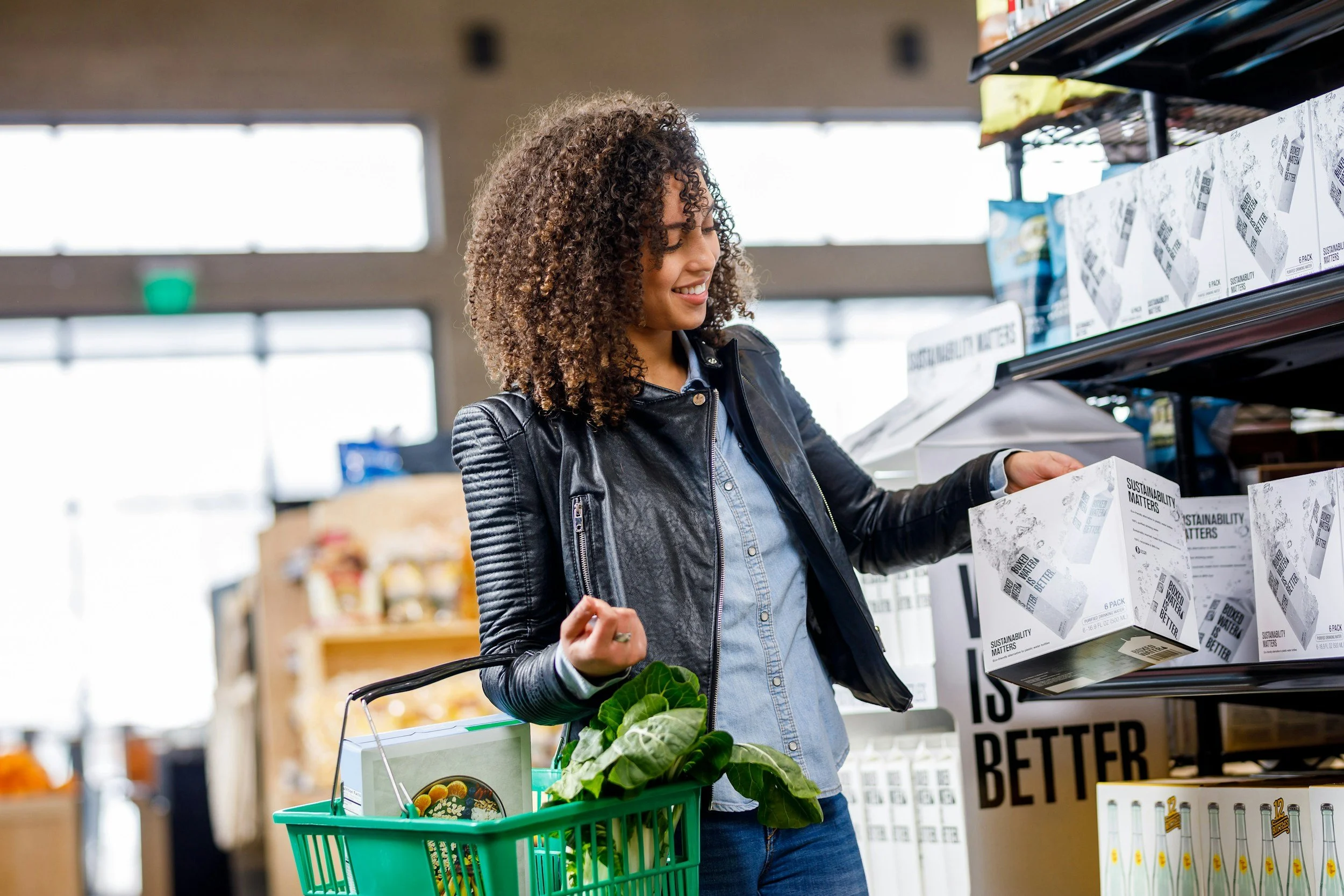
Kroger Precision Marketing’s latest research is a reminder that stated openness to innovation does not automatically translate to behavioral change. While 88% of shoppers define a “new flavor” as innovation and more than half consider seasonal variations innovative, most purchasing decisions remain governed by habit. Four out of five shoppers decide to try something new while actively shopping, and placement matters. Endcaps dominate in-store discovery, while digital ads and savings pages drive online experimentation.
For food innovation teams, this reinforces an important truth: novelty alone rarely breaks routine. Context, visibility, and price architecture do. With 80% of shoppers willing to switch when a new product is priced 20% below their usual choice, commercialization strategy, not just concept strength, determines trial. The takeaway is clear: innovation must be designed for how shoppers actually behave, not how they say they behave.
Explore the full study here.
General Mills Is “Innovating How We Innovate”. And They are Betting on AI
Food Dive | General Mills
General Mills’ latest commentary at CAGNY signals a meaningful shift: AI is no longer peripheral to innovation; it’s central. The company is building digital personas to simulate consumer needs and guide product development, while also using AI to refine targeting and marketing activation. At the same time, it is committing to bigger renovation bets across billion-dollar brands, from GLP-1-friendly protein extensions to packaging upgrades that drive sales lift.
The context matters. With organic sales under pressure and consumer sentiment soft, General Mills is leaning into capability-building, not just new SKUs. The ambition to increase net sales from new products by 25% suggests innovation discipline must match innovation velocity. For innovation leaders, this reinforces an emerging expectation: AI isn’t replacing human insight, but it is augmenting the speed and precision with which insight translates to what ends up on the shelf.
Read the full article here.
The GLP-1 Era Is Rewriting the Formulation Playbook
Nutrition Insight | GLP-1 & Ingredient Strategy
One in three US consumers surveyed have already used a GLP-1 medication, according to Tate & Lyle research, signaling that this is not a fringe development but a structural shift in eating behavior. Ingredient suppliers are urging brands to rethink formulation across the entire GLP-1 lifecycle: before, during, and especially after medication use. Protein and fiber are emerging as foundational, but the conversation is expanding beyond macros to gut tolerance, nutrient density per gram, and long-term habit support.
The deeper signal for food innovation companies is that formulation strategy is becoming more longitudinal. It’s no longer enough to create a “GLP-1-friendly” SKU; brands are being encouraged to design nutrient-efficient formats that support maintenance and prevent rebound. The maintenance phase, in particular, is being framed as the largest commercial opportunity. Innovation leaders would be wise to interpret this not as a temporary weight-loss moment, but as a broader reset in how consumers define nutritional value.
Dive deeper into the report here.
Packaging in 2026: Focus, Speed, and Flexibility
Packaging Digest | Branding & Packaging Predictions
Portfolio pruning, AI-enabled workflows, and dynamic visual identities are converging to redefine packaging’s strategic role. As companies like Reckitt and Pepsi streamline SKUs and double down on power brands, packaging clarity becomes more than aesthetic; it’s economic leverage. Fewer SKUs demand stronger shelf expression and tighter brand architecture.
Simultaneously, AI is accelerating packaging adaptation, from mechanicals to multilingual rollouts, turning speed-to-market into a tangible competitive advantage. And visual identity systems are becoming more flexible, built for motion across digital environments. For CPG innovation leaders, this reinforces a critical insight: packaging is no longer the final step in innovation. It is a growth lever that influences velocity, adaptability, and brand coherence across channels.
Review the full predictions here.
If you’re leading innovation inside a food or beverage organization, each of these themes — shopper behavior, AI-enabled development, GLP-1-driven formulation shifts, and packaging agility — reflects the same underlying imperative:
Innovation must be intentional, context-aware, and system-driven.
If you want to connect on all things innovation, or have a food innovation project that you want to discuss, please reach out to us. We’d love to help.
